PERFORMANCE COACHING
WIN THE MATCHES
THAT MATTER
When the double decides the leg, mechanics aren't enough. Master the mental routines, eliminate dartitis triggers, and lock into an unshakeable flow state at the oche under maximum tournament pressure.
1-on-1 Confidential Assessment · Tour & County Level Protocols · Zero Obligation
NEUROLOGICAL CHOKE POINTS
OVERCOME THE SHAKES
When you step to the oche under genuine competitive pressure, dartitis is not a flaw in your mechanical grip. It is a protective freeze reflex triggered by the amygdala. High-stakes autonomic stress floods your forearm flexors with adrenaline, causing micro-spasms right at the deceleration phase of your throw.
Throwing another 500 practice darts into an empty board will not fix this. Conscious over-monitoring overrides the automatic motor pathways you built over years, locking the elbow joint and creating the catastrophic sensation that your fingers cannot release the barrel.
- Motor cortex lock: Involuntary hesitation at the apex of draw-back
- Tunnel vision collapse: Fixating on missing wire rather than the target bed
- Grip tension escalation: 300% surge in finger squeeze pressure prior to release
CRITICAL BLOCK 01 // KINETIC TREMOR
THE SHAKING HAND
The micro-tremor that appears precisely during the backswing extension. Adrenaline short-circuits fine motor control in the index finger and thumb, converting a smooth release into an unpredictable yank into the single 1 or single 5.
CRITICAL BLOCK 02 // TARGET FREEZE
THE DOUBLING YIPS
Standing over Double 16 or Double 20 while your forearm locks rigid. The visual cortex locks onto the outer wire instead of the inner bed, stalling your rhythm and causing painful hesitation as you second-guess your release timing.
CRITICAL BLOCK 03 // CASCADE COLLAPSE
THE DROPPED AVERAGE
Cruising at an effortless 94-average in the practice room, only to see your scoring disintegrate to 62 during league competition. Internal negative commentary overwhelms physical rhythm, causing darts to hit flat and drop into the 3 bed.
METHODOLOGY // PSYCHOLOGICAL CALIBRATION
THE ANATOMY OF
CLINICAL FINISHING
Match dart finishes are not won in the arm - they are decided in the neural gap between decision and release. Our technical coaching deconstructs how mental stillness directly dictates dart groupings under maximum championship pressure.
PHASE 01 // PSYCHOLOGICAL FOCUS
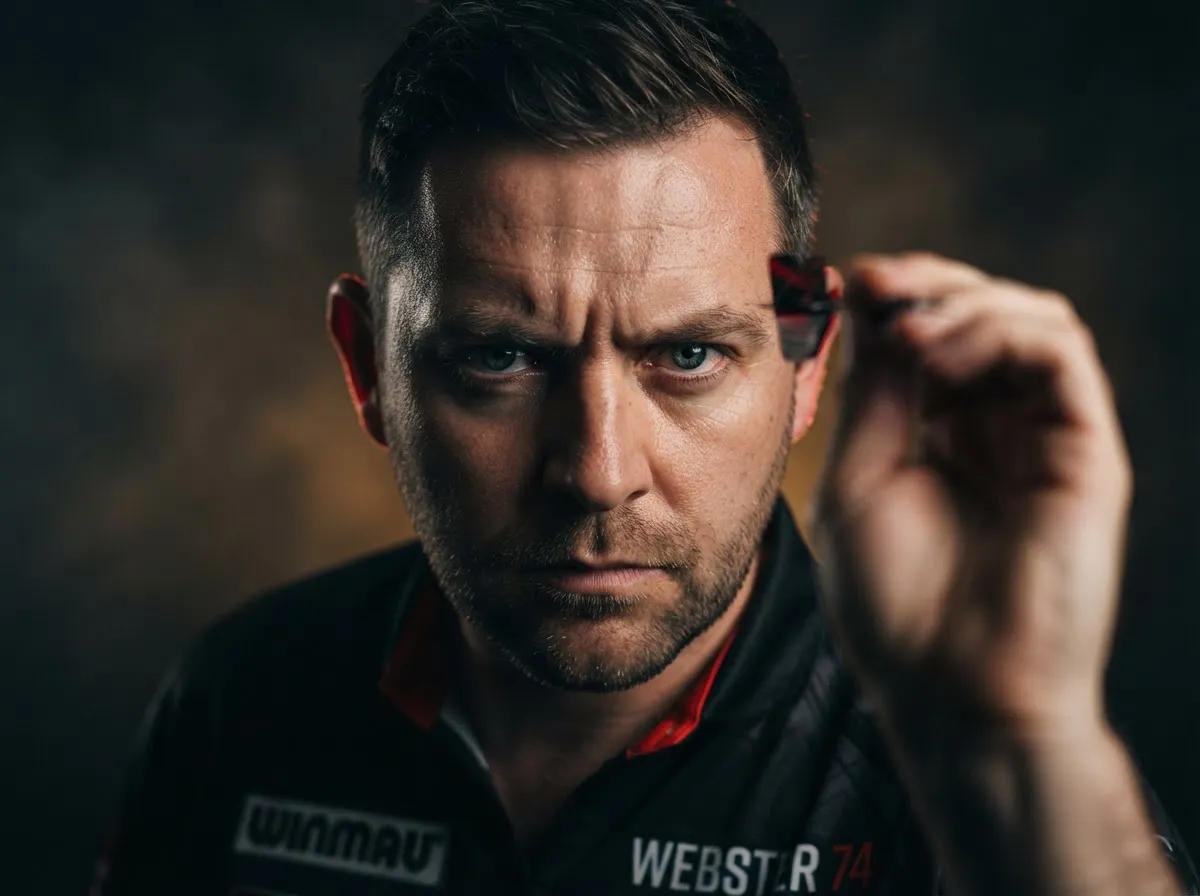
THE MIND: INTERNAL OCULAR LOCK
Before your foot contacts the raised timber, cognitive overload spikes adrenaline and narrows fine-motor control. We train diaphragmatic cadence and saccadic gaze anchoring, muting crowd noise and dropping heart rate within four seconds.
- Pressure-Performance Matrix regulation prevents sympathetic nerve tremor
- Gaze fixation on the wire intersection eliminates target-jumping hesitation
- Pre-shot cognitive script protects rhythm against match dart distractions
PHASE 02 // KINETIC EXECUTION
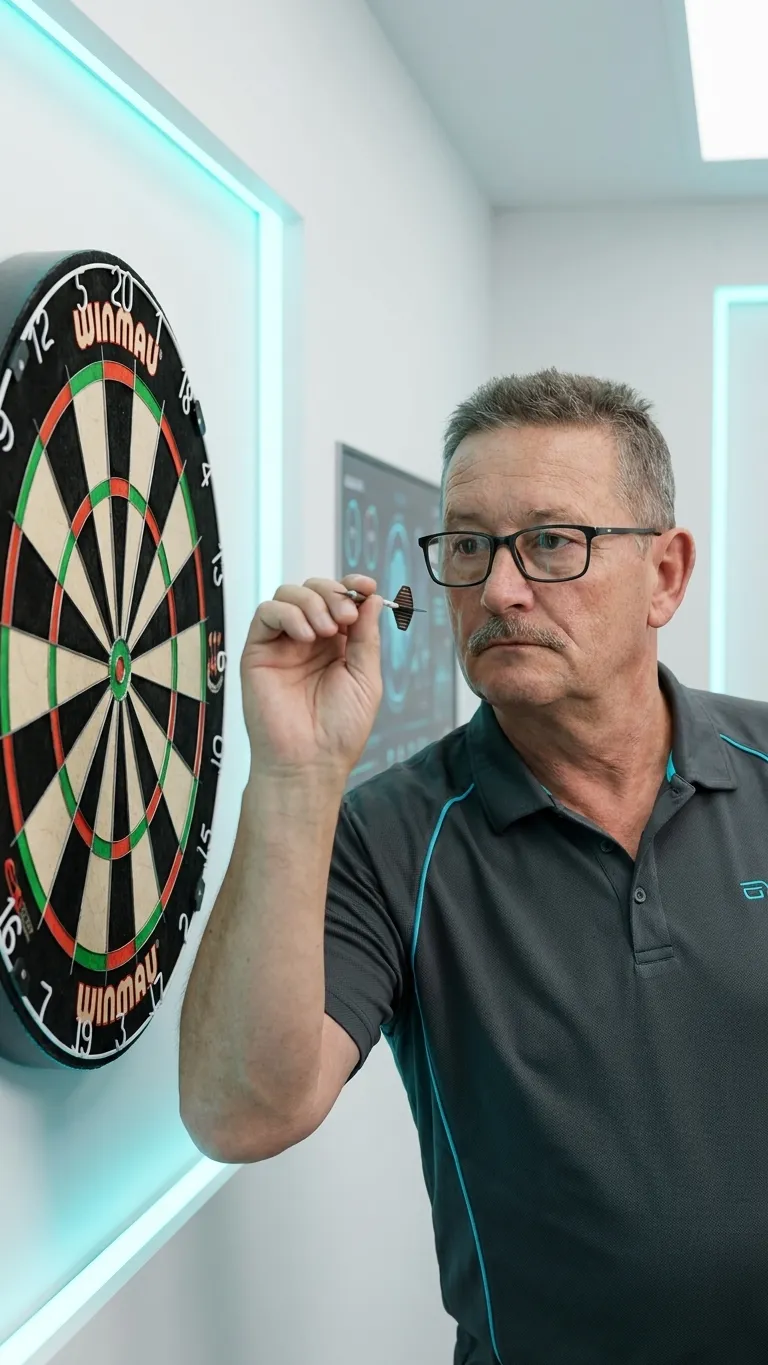
THE OCHE: SURGICAL FLOW DELIVERY
When neural composure holds, physical mechanics become autonomous. The forearm acts as a purely conditioned lever, accelerating through release without mid-throw micro-corrections that pull darts into the single bed.
- Zero-deceleration follow-through eliminates the classic high-pressure snatch
- Reproducible finger release window locked to under 12 milliseconds
- Immediate cognitive reset whether converting or resetting on the next visit
PRESSURE-PERFORMANCE MATRIX
SHIFT FROM PANIC TO REPEATABLE FLOW STATE
Stop letting tournament pressure erode months of practice board preparation. Learn how elite competitors reprogram their nervous response and lock their throw in the decisive leg.
1-ON-1 ELITE COGNITIVE & TECHNICAL MENTORSHIP FOR SERIOUS PLAYERS
FREE 20-MINUTE MENTAL DIAGNOSTIC
CLAIM YOUR
MENTAL EDGE
Stop letting dart-board tension, late-leg panic, and release hesitations wreck your match average. In this focused 20-minute consultation, we analyze your exact trigger points under pressure and hand you an immediate routine you can deploy at the oche tonight.
- Precision Diagnostic: Identify the physiological micro-flinch that ruins your double attempts.
- The Oche Reset Protocol: A 3-second breathing trigger to instantly drop heart rate between throws.
- Match Ready Strategy: Direct, zero-fluff feedback tailored to your current scoring average.
STRICT CAP: Limited to 6 competitive dart players per calendar week to preserve analysis depth.
LOCK IN YOUR SESSION
Direct video session with our head performance psychologist. Zero sales fluff.
UNCOMPROMISING PRECISION
COACHING CLARITY
Mental mastery is not reserved for televised tour stages. Whether you compete in local pub leagues or battle through Super League weekends, arm tension and target doubt stem from neural threat reflexes, not flawed mechanics. We never rebuild your natural throw or force unnatural changes to your release. Instead, we train your nervous system to stay neutral under heavy match pressure so your established muscle memory executes without hesitation.
THE OCHE PROMISE: ZERO MECHANICAL INTERFERENCE
Keep your barrels, your stance, and your rhythm. We only calibrate what happens between your ears from the moment your lead foot anchors to the throw line.
Is this coaching exclusively for touring professionals?
No. The psychological barrier at match dart is identical whether playing on televised stages or for your local pub team. Any competitor holding a competitive average benefits immediately from systematic pressure management.
Do I need to rebuild my grip, stance, or throw mechanics?
Not at all. We never alter your physical release or equipment. Our work targets pre-throw cognitive triggers, adrenaline containment, and post-miss resets to let your established throw fire cleanly.
How quickly do players experience measurable results?
Most players report noticeably calmer breathing and eliminated forearm tightness within their first competitive match post-session. Full autonomic stabilization typically locks in over 3 to 4 competitive outings.
Can this method resolve release hesitation or dartitis?
Yes. Release stalls are acute neurological threat loops where the brain perceives the target as danger. We use targeted cognitive reframing drills to systematically decouple that freeze response.
How are 1-on-1 coaching sessions structured?
Sessions are conducted live via secure video analysis. We assess your pressure thresholds, identify pacing breakdowns, and install customized behavioral reset triggers tailored to your match tempo.

MIND ON THE OCHE
Elite sports psychology engineered for the decisive 7 feet 9¼ inches. Developing mental fortitude, pressure management, and surgical clutch execution when the match is on the wire.


© 2026 Mind On The Oche. Precision Dart Performance Psychology. All rights reserved.